



RAM 2500 Cummins Diesel vs. 6.4L HEMI: Which Engine Should You Choose?
Performance Dodge Blog · Engine Comparison
What You’ll Learn in This Guide
Searching for a new RAM 2500 for sale near me? Here is how the Cummins turbo-diesel and 6.4L HEMI gas V8 actually compare for towing, cost, and daily use.
6.4L HEMI · Gas V8
Different Towing Strengths
Different Ownership Costs

Key Takeaways
- ✓The Cummins diesel is built around low-end torque, which matters most for heavy, sustained towing
- ✓The 6.4L HEMI is quicker off the line and simpler to maintain over the life of the truck
- ✓Diesel carries a real upfront cost premium and adds diesel exhaust fluid to routine maintenance
- ✓Gas V8 trucks are generally cheaper and faster to repair at a wider range of local shops
- ✓South Jersey buyers should match the engine to how often and how heavy they actually tow
Anyone shopping a new RAM 2500 for sale near me in Woodbury, Cherry Hill, or the wider South Jersey area eventually hits the same fork in the road: Cummins turbo-diesel or 6.4L HEMI gas V8? Both are proven, capable engines, but they are built around different strengths. This guide breaks down where they differ and which one actually fits how you plan to use the truck.
The Core Difference: Torque vs. Horsepower
The Cummins inline-six turbo-diesel is built around massive low-end torque, delivered early in the rev range, which is exactly what makes towing a heavy trailer feel effortless rather than strained. The 6.4L HEMI is a gas V8 that produces strong horsepower and builds power more the way a traditional gas engine does, revving higher and responding quicker off the line before a load is attached.
That distinction is the real dividing line. A buyer regularly pulling a heavy gooseneck or livestock trailer will feel the Cummins working the way it is designed to. A buyer who tows occasionally, or wants a truck that feels quick and responsive unloaded, often prefers how the 6.4 HEMI drives day to day.
Everyday Behavior Unloaded
Unloaded, the two engines feel genuinely different behind the wheel. The 6.4 HEMI is more eager off the line and has the familiar sound and throttle response of a traditional gas V8. The Cummins is quieter at idle than older diesel generations but still has a distinct diesel character, and its power delivery feels most natural when there is weight behind the truck rather than in an empty parking lot.

Towing Feel and Everyday Driving
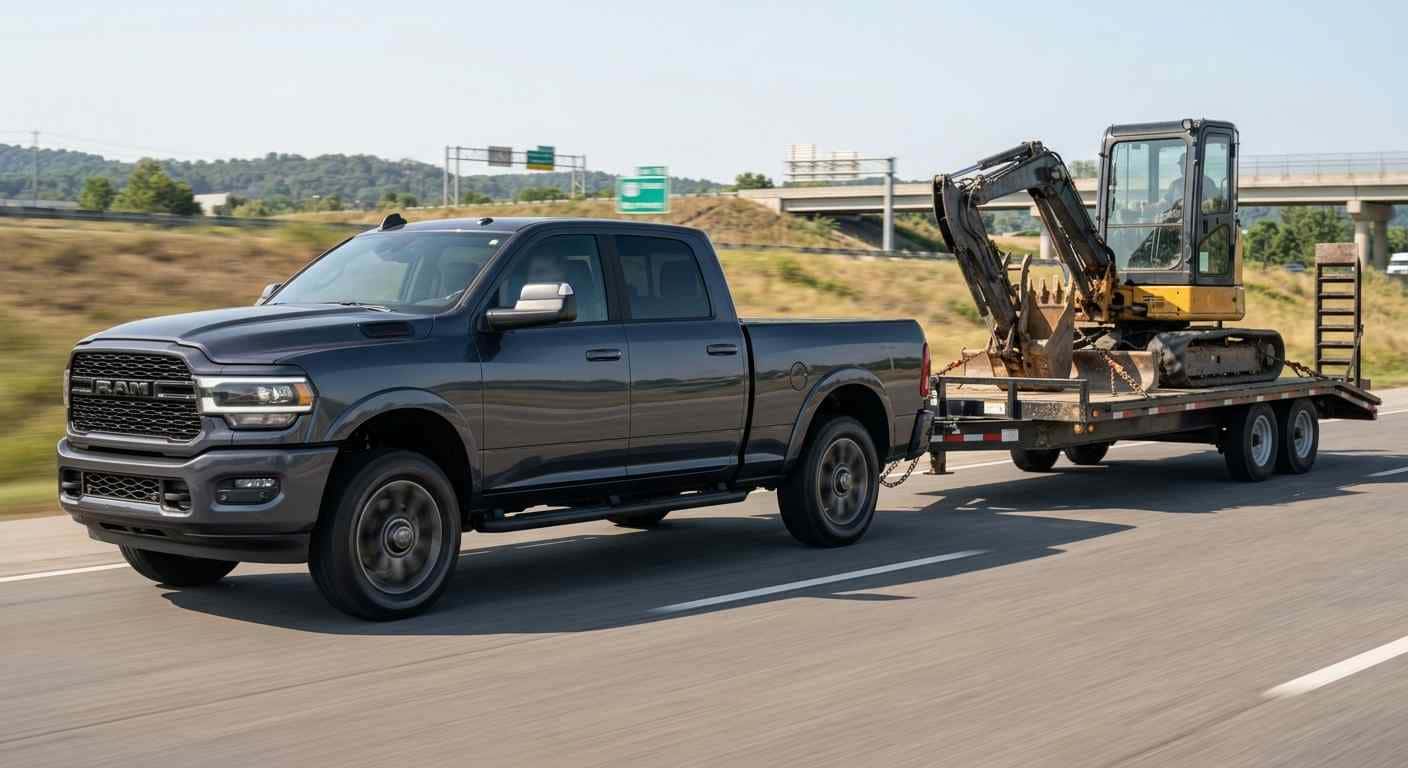
When a heavy trailer is attached, the difference becomes obvious quickly. The Cummins pulls with a steady, confident feel and does not need to work as hard to maintain speed on grades, which is exactly why it remains the preferred choice for buyers regularly hauling equipment, livestock, or large campers. The 6.4 HEMI can absolutely tow within its rated capacity, but it works noticeably harder to do it, particularly on hills or at higher trailer weights.
For lighter or occasional towing, that gap matters less. A buyer towing a smaller trailer a few times a year may never notice the difference the Cummins is built to solve, while enjoying the HEMI’s quicker, more responsive character the rest of the time.
Cummins vs. 6.4 HEMI at a Glance
| Category | Cummins Diesel | 6.4L HEMI |
|---|---|---|
| Power Character | High torque, delivered early | Strong horsepower, revs freely |
| Best For | Heavy, sustained towing | Light towing, everyday driving |
| Fuel Economy Towing | Stronger under heavy load | Lower once a trailer is attached |
| Maintenance | More involved, needs DEF | Simpler, familiar gas V8 service |
| Upfront Cost | Higher | Lower |
| Everyday Character | Quieter than older diesels, distinct feel | Familiar, responsive gas V8 feel |
Maintenance, Fuel, and Ownership Costs
Diesel exhaust fluid, or DEF, is a routine part of Cummins ownership and needs to be topped off periodically alongside regular oil changes. Diesel fuel itself often costs more per gallon than gasoline, though the Cummins can offset some of that with better efficiency under heavy load. The 6.4 HEMI skips DEF entirely and can generally be serviced at a wider range of shops, since gas V8 maintenance is more straightforward and familiar to more technicians.
Upfront price is one of the clearest differences between the two. The Cummins diesel option carries a real cost premium over the 6.4 HEMI, so it is worth running both through a payment calculator to see how that premium plays out in a monthly payment before deciding.
Who the Cummins Diesel Makes More Sense For
The Cummins fits buyers whose towing needs are heavy and frequent, not occasional. Contractors pulling loaded trailers, buyers towing large campers, or anyone regularly working the truck near its towing limits will get real, tangible benefit from the diesel’s torque advantage. If that describes your routine, current RAM 2500 diesel inventory is worth a closer look.
Who the 6.4 HEMI Makes More Sense For
The 6.4 HEMI fits buyers who want heavy-duty truck capability without the added cost and complexity of diesel ownership. It is a strong fit for lighter or occasional towing, general work use, and buyers who value simpler maintenance and a lower purchase price over maximum towing headroom. If your towing needs are moderate, a gas-powered RAM 2500 may be the more practical, lower-cost choice.
What to Check Before Buying Either Engine
Regardless of which engine you lean toward, a few questions are worth answering honestly before you sign.

Bringing the Comparison Together
There is no single correct answer between the Cummins and the 6.4 HEMI, only a more correct answer for how you actually use the truck. Buyers with heavy, regular towing demands are better served long-term by the Cummins, even with the added upfront cost. Buyers with lighter or occasional towing needs, or who simply want a lower-cost, easier-to-maintain truck, are often just as well served by the 6.4 HEMI.
If you want to compare real, current inventory side by side rather than working from specs alone, our RAM 2500 inventory shows what is actually available locally across both engine options right now.
Ready to Compare the Engines in Person?
Visit Performance Dodge RAM in Woodbury, NJ, to test drive a Cummins diesel and 6.4 HEMI RAM 2500 back-to-back, or browse current inventory online.
Frequently Asked Questions
Is the Cummins diesel worth the extra cost for a RAM 2500?
It depends on how often and how heavy you tow. Buyers regularly pulling heavy trailers get real, tangible benefit from the Cummins. For lighter or occasional towing, the cost premium is harder to justify.
Does the 6.4 HEMI have enough power to tow a trailer?
Yes, the 6.4 HEMI can tow within its rated capacity comfortably. It simply works harder to do it than the Cummins, particularly on grades or at higher trailer weights.
What is diesel exhaust fluid and do I need to worry about it?
Diesel exhaust fluid, or DEF, is a fluid the Cummins engine uses as part of its emissions system and needs to be topped off periodically. It is a routine part of diesel ownership rather than a major maintenance concern.
Is a gas RAM 2500 cheaper to maintain than a diesel one?
Generally, yes. The 6.4 HEMI skips DEF entirely and can typically be serviced at a wider range of shops, since gas V8 maintenance is more familiar to more technicians than diesel service.
Where can I see current RAM 2500 pricing near Woodbury, NJ?
Current pricing and available incentives for both Cummins and 6.4 HEMI configurations can be found on our RAM 2500 inventory page, or by calling our sales team directly at 856-879-1947.
0 comment(s) so far on RAM 2500 Cummins Diesel vs. 6.4L HEMI: Which Engine Should You Choose?